

Before getting into the first four months, it is worth pausing on why the Diplomatic Advisory Hub exists in the first place. Geopolitics is no longer something abstract happening in the background for businesses to note and move on from. It is operational. Firms are making decisions every day in a far more volatile and fragmented international environment: conflict in the Middle East, the uncertainty of US tariffs, growing complexity around China, supply chain disruption, sanctions, tariffs and regulatory divergence.
For many companies, particularly SMEs, the challenge is not just that the world feels less predictable. It is that they often do not have the internal capacity to interpret what these developments mean for commercial decisions. That is where the Hub becomes so important. Our real differentiator is not just diplomatic insight from the FCDO’s global network, valuable though that is. It is the combination of that insight with the reach, trust and local relationships of Chambers across the UK and internationally. This gives the Hub a unique credibility and practical delivery capability. And it matters because, despite a tougher geopolitical backdrop, the case for international trade and growth has not gone away. The opportunities remain significant. Businesses that stay internationally engaged, informed and connected will be best placed to spot those opportunities, manage the risks around them and succeed.
Just over four months into the life of the Diplomatic Advisory Hub feels a good moment to pause, take stock, and share a few early highlights. The short version: we’ve been busy – out and about with Chambers across the UK, running webinars on fast-moving international issues, and responding to a steady stream of questions through the Hub’s website.
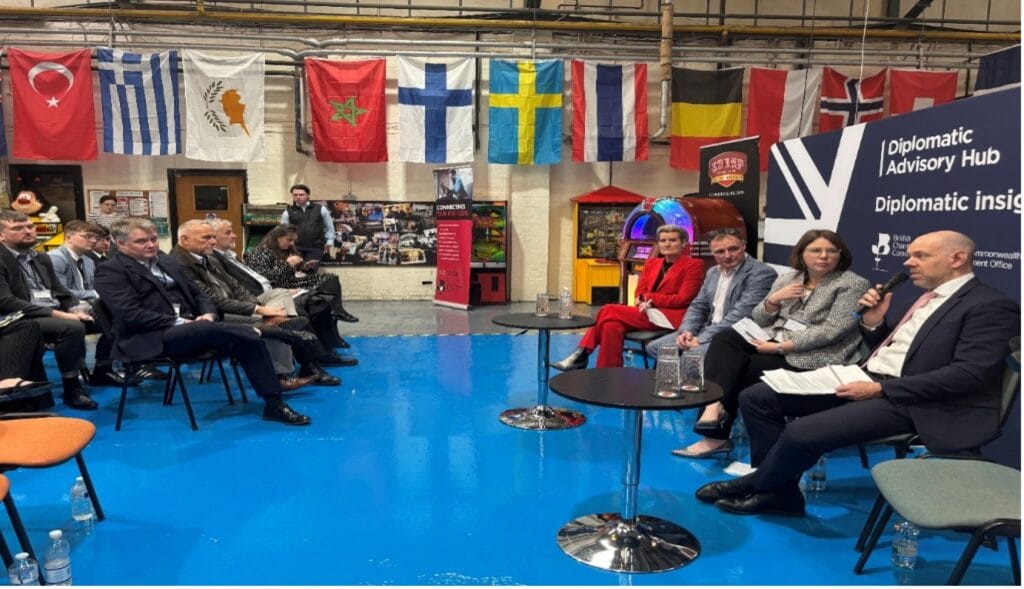
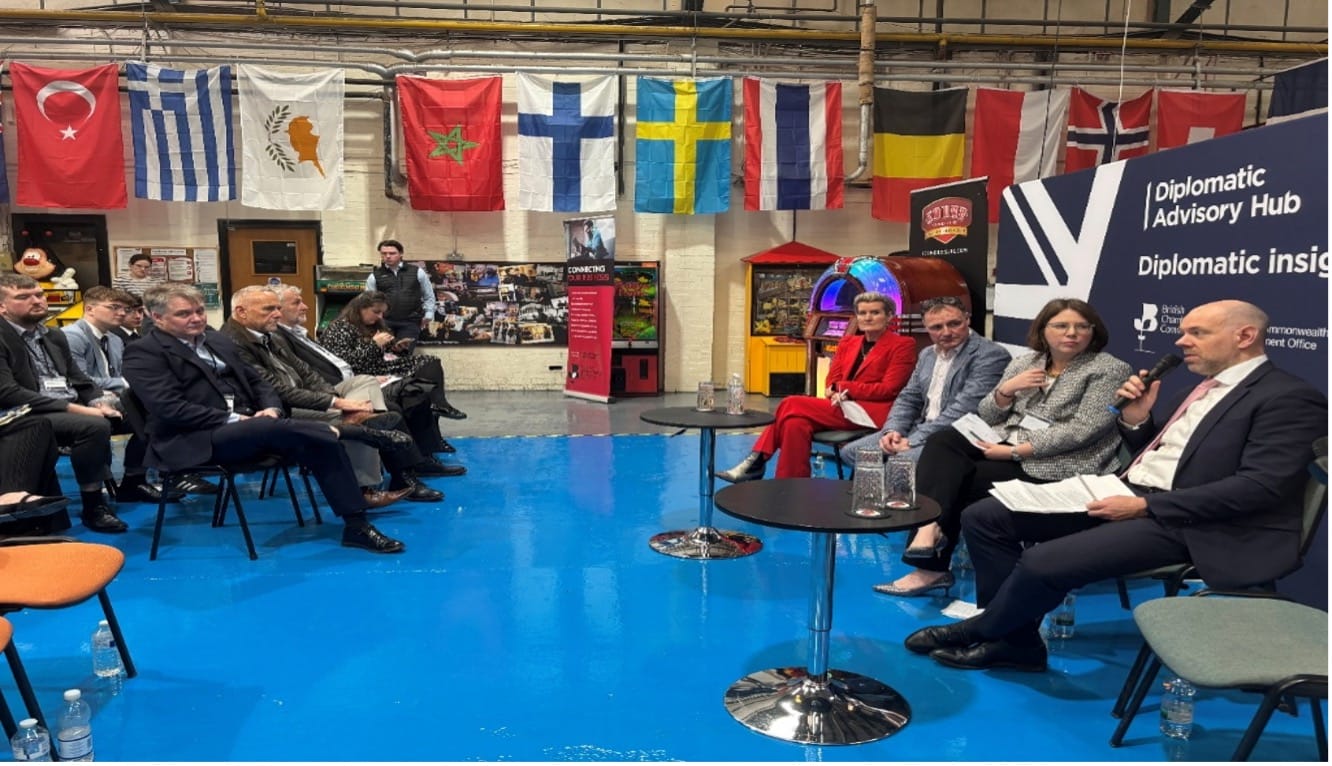
Diplomatic Advisory Hub launch event at SoundLeisure in Leeds, 5 March 2026 (Left to right: Shevaun Haviland (DG, BCC), Chris Black (Joint Chairman SoundLeisure), Tammy Reynolds (Growth Director, FCDO) and Richard Oppenheim.)
In person: the best conversations are often after the formal bit
One of the most energising parts of these first months has been getting out to meet businesses where they are, with Chambers as our guide and host. We’ve visited and spoken with companies in Leeds, Glasgow, Lincoln, Ipswich, Cambridge, Belfast and Aberdeen – each place with its own mix of sectors, ambitions and very practical questions about operating in today’s international climate.
A personal reflection: one of the simplest indicators that we’re adding value is that every Chamber we’ve visited so far has invited us back. Building relationships with Chambers and companies is crucial to understanding what sort of advice and engagement is most valuable.
Big audiences are great – helping us extend our reach, raise awareness of the Hub, and get the basics of our offer in front of more firms. But I’ve been repeatedly reminded that the smaller conversations are where the real value often lies. A ten-minute chat after a speech, a quick aside during a roundtable, or a follow-up call can get into the specifics: the market a company is targeting, the partner they’re considering, the regulatory snag they’ve hit, or the political risk they’re trying to price in. That’s where we can move from general to targeted insight.
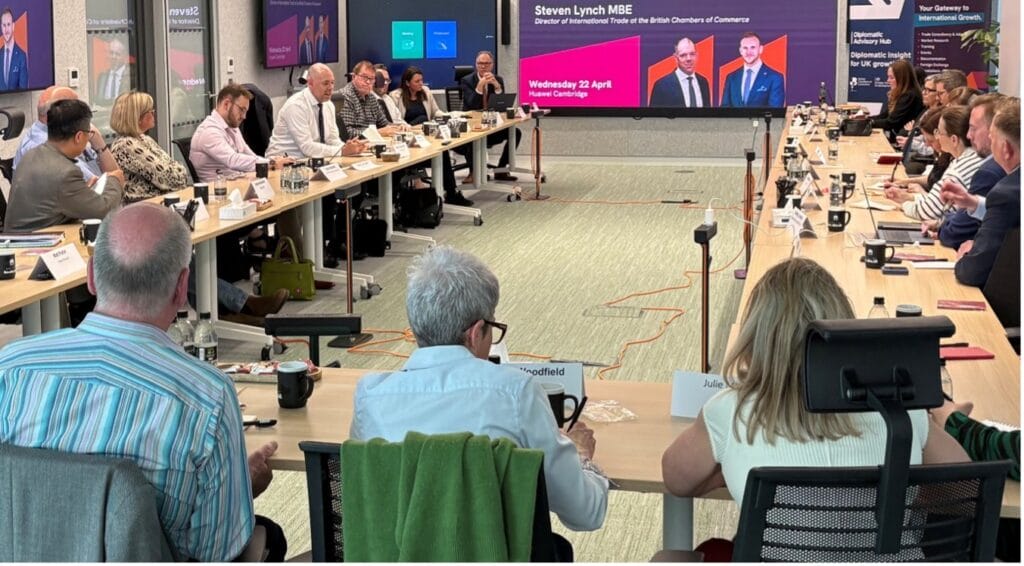
Cambridge Chambers of Commerce roundtable event, 22 April 2026
Webinars: reaching thousands, quickly
Alongside the travel, we’ve run three carefully curated one-hour webinars for businesses on the crisis in the Middle East -bringing in experts from the FCDO and beyond to offer perspective and take questions. More than 1300 companies attended. That kind of reach, at speed, is exactly why we’re investing in this format: when the international environment shifts quickly, businesses need clear, calm, practical insight – and they need it in days, not months.
We’re planning further webinars in the coming weeks and months, including sessions focused on India, China, the US and the EU. We will advertise details on our website once they are confirmed. The aim is straightforward: help companies think through the “so what?” – what’s changing, what’s not, and what sensible steps they can take now.
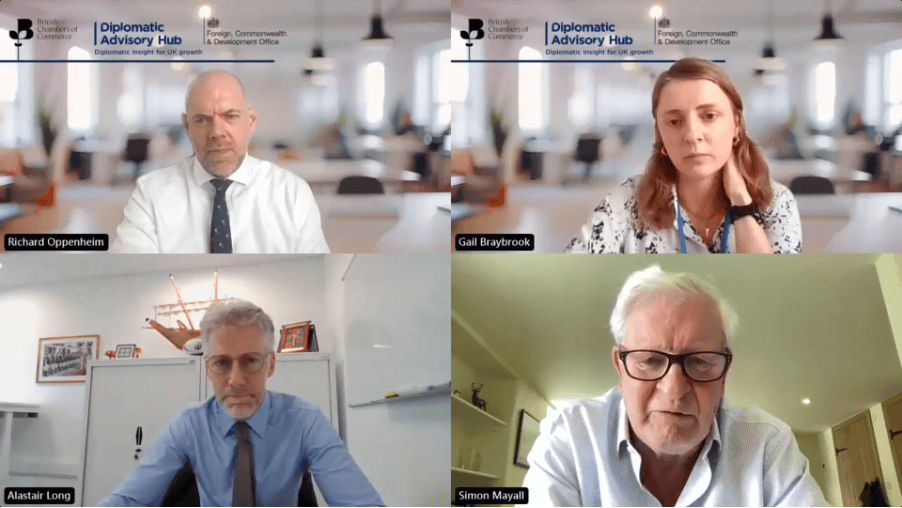
Our second webinar on the Middle East crisis, focussing on energy and military issues. Bottom left: Alastair Long, HMA Bahrain. Bottom right: Lt Gen Sir Simon Mayall (ret).
Website queries: a quiet but important signal
We’ve also launched and continued to develop the Hub website as a one-stop shop—somewhere companies can see what we do, find upcoming events and get in touch. Behind the scenes, we’ve already answered more than 100 queries via the “contact us” tab.
Those inbound queries are a quieter signal than a packed room or a big webinar, but they’re no less important. They tell us what’s landing, what’s confusing, and where the demand really sits – often in very specific places. They’ve also reinforced a third reflection for me: we’re only scratching the surface of what we can offer in terms of useful insight. The questions we’re getting – from market entry planning to sudden political risk, from practical regulatory issues to “who should I speak to?” -suggest there is significant appetite for a Hub that can translate the international landscape into something usable for decision-makers.
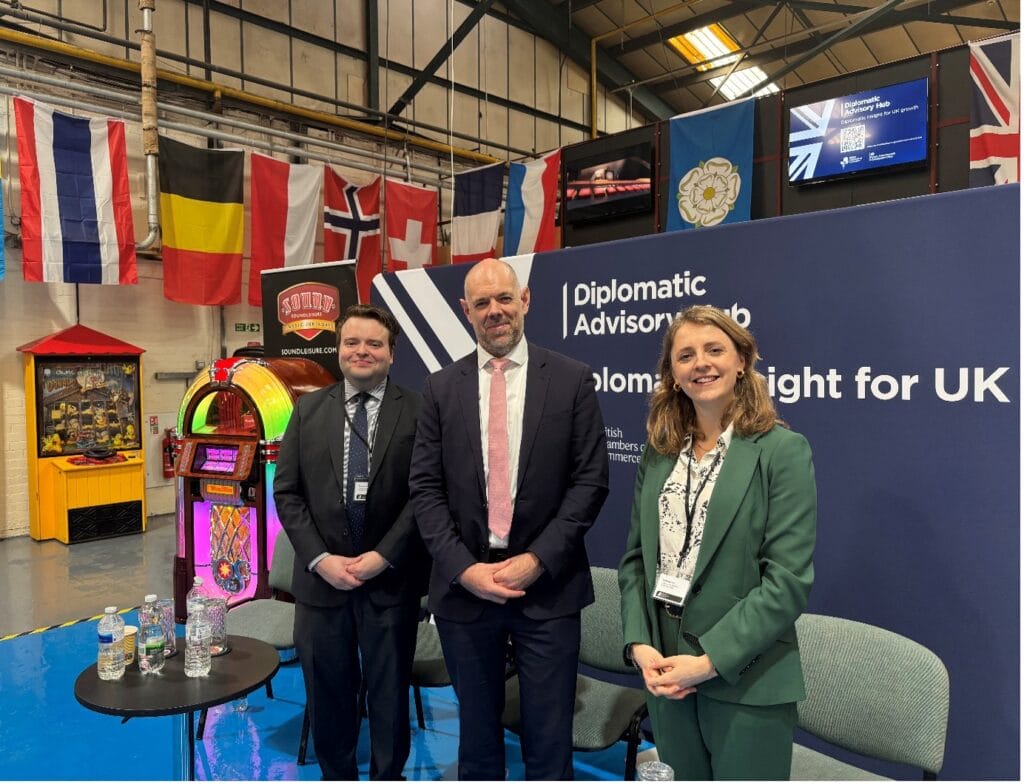
Left to right: Charlie Merritt, Richard Oppenheim and Gail Braybrook – the Diplomatic Advisory Hub team!
Partnerships: building the ecosystem around the Hub
We’re also seeing growing interest from other organisations – public and private – who want to partner with us in different ways. That’s encouraging, and it’s also part of the point. The Hub won’t succeed by trying to do everything; it succeeds by connecting expertise, convening the right people, and complementing the excellent support that already exists both from within Government and outside. So, we want to keep building partnerships with other like-minded organisations who are trying to help UK companies trade and expand overseas.
Over the next few weeks, we’ll be visiting more parts of the UK including Bristol, Sussex and the Isle of Wight alongside a strong DAH presence at key British Chambers of Commerce moments, including the Global Annual Conference on 25 June. If you see us at an event, please do come and say hello. And if you can’t make an event, the website route works just as well: send us a question and we’ll do our best to respond quickly and usefully.
For now, thank you to the Chambers, colleagues and partners who have helped us get moving at pace. Four months in, the direction of travel feels right. There’s a lot more to do – and a lot more value we can unlock – but the early signs are promising.
Richard Oppenheim
Director, Diplomatic Advisory Hub