

Stuart Morrison, Research Manager, British Chambers of Commerce
Imagine trying to navigate a stormy sea without a compass. That’s what economic policy would look like without reliable, real-time data from the businesses that live and breathe the economy every day.
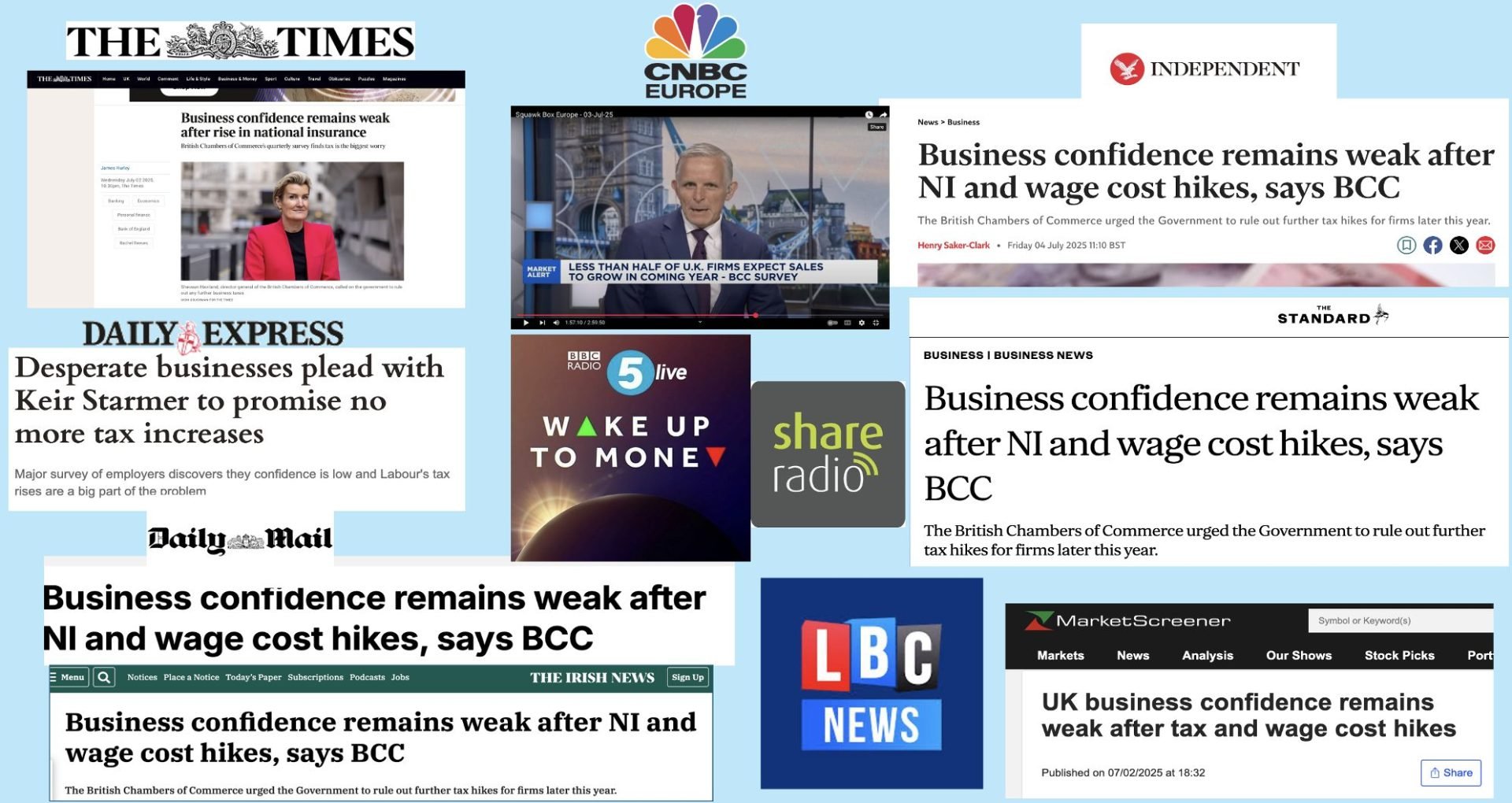
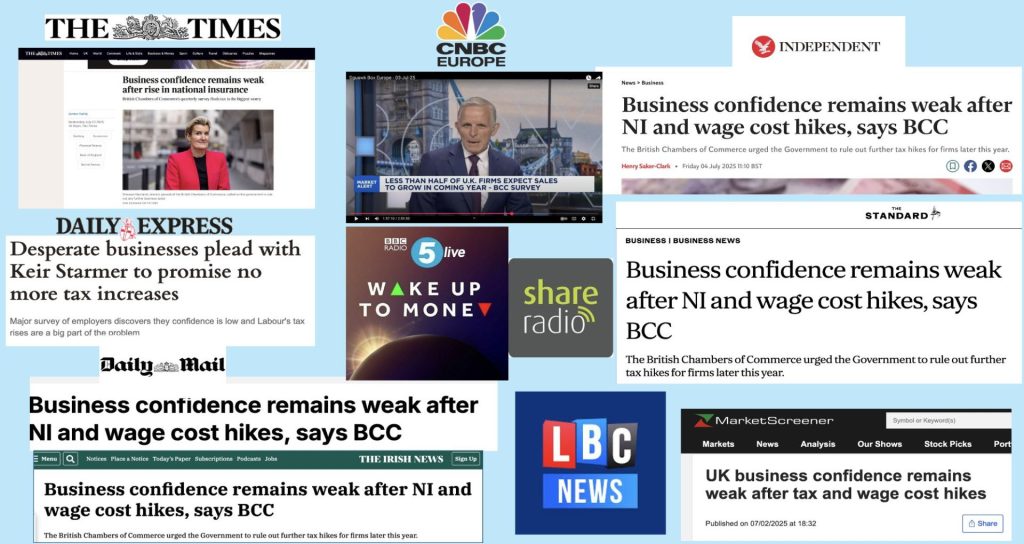
Politicians and policymakers often speak of ‘evidence-based decisions’. But where does that evidence come from? One of the most trusted sources is the British Chambers of Commerce (BCC) Quarterly Economic Survey (QES), the UK’s largest and longest-running survey of business sentiment.
For businesses around the UK, taking part is more than just filling out a form. It’s a way of ensuring that the real challenges and opportunities faced in different parts of the UK are heard and factored into decisions at the very top.
A 5,000-firm compass
Launched in 1989, the QES is now completed by more than 5,000 businesses each quarter. It covers every sector, every region, and every size of enterprise. It asks practical questions: Are sales up or down? Is cash flow improving? Are firms looking to hire, or cutting back? Do companies expect to invest, or are they holding off?
This collection of responses provides something rare: a living picture of the UK economy as businesses themselves experience it, not as retrospective statistics report it. Gross Domestic Product (GDP) figures are released months after the fact. Employment data lags behind reality. By the time those numbers appear, the world has moved on. By contrast, the QES, is a leading indicator – it shows where we could be heading, not just where we have been.
It’s no coincidence that the Bank of England, HM Treasury, the Office for Budget Responsibility and international institutions like the IMF all cite the QES in their deliberations.
As the Governor of the Bank of England Andrew Bailey said “We all benefit from data and surveys, including the informative recruitment and economic surveys conducted by the British Chambers of Commerce.
Why voices from your area matter
The UK economy is not one monolithic entity. It is a patchwork of regions, each with its own strengths, pressures and priorities. A tech start-up cluster in one city, a manufacturing hub in another, and a port town elsewhere may all face very different realities.
Without local input, national policy risks becoming lopsided, designed for the needs of one part of the country but blind to the others. Consider:
- Labour markets – recruitment pressures in one region may look very different to those in another.
- Export conditions – areas with strong manufacturing or maritime sectors may face unique hurdles in global supply chains.
- Infrastructure priorities – transport, digital connectivity and green energy needs can vary dramatically across the country.
When local firms take part in the QES, they insert their lived reality into the national conversation. Without those voices, policymakers are left with an incomplete picture.
From data to influence
Some might ask: what difference does one survey make? The answer is: quite a lot.
Take the pandemic. When COVID-19 shut down large parts of the economy, it was the rapid feedback from businesses through the QES that helped make the case for furlough, business rates relief and government-backed loans. Without those numbers, policymakers would have been flying blind.
Or take recent spikes in inflation. Long before official data confirmed the squeeze, QES results showed firms reporting rising cost pressures. That evidence strengthened the argument for targeted support with energy bills and supply chain disruption.
In both cases, the QES translated the scattered experiences of thousands of firms into a coherent signal that could not be ignored.
Two minutes of your time
Smart economic policy depends on good data, clear reasoning and a willingness to face reality as it is, not as we wish it to be. The QES embodies that principle. It strips away anecdote and ideology, replacing them with systematically gathered evidence from the ground.
For any business, completing the survey takes just a few minutes each quarter. But those minutes amplify into national influence. They influence how policy is designed to support growth, investment and jobs. And they ensure that decisions taken in Westminster are informed by the realities of businesses across every corner of the UK.
So when the invitation to take part in the Quarterly Economic Survey arrives, don’t dismiss it as paperwork. See it as a chance to put your region’s economy on the map, and to help guide the course of the nation.
Further reading
QES Q3 2025: https://www.britishchambers.org.uk/news/2025/10/bruised-firms-not-ready-for-another-budget-battering/
BCC Insights Unit publications: https://www.britishchambers.org.uk/insights-unit/publications-and-commentary