

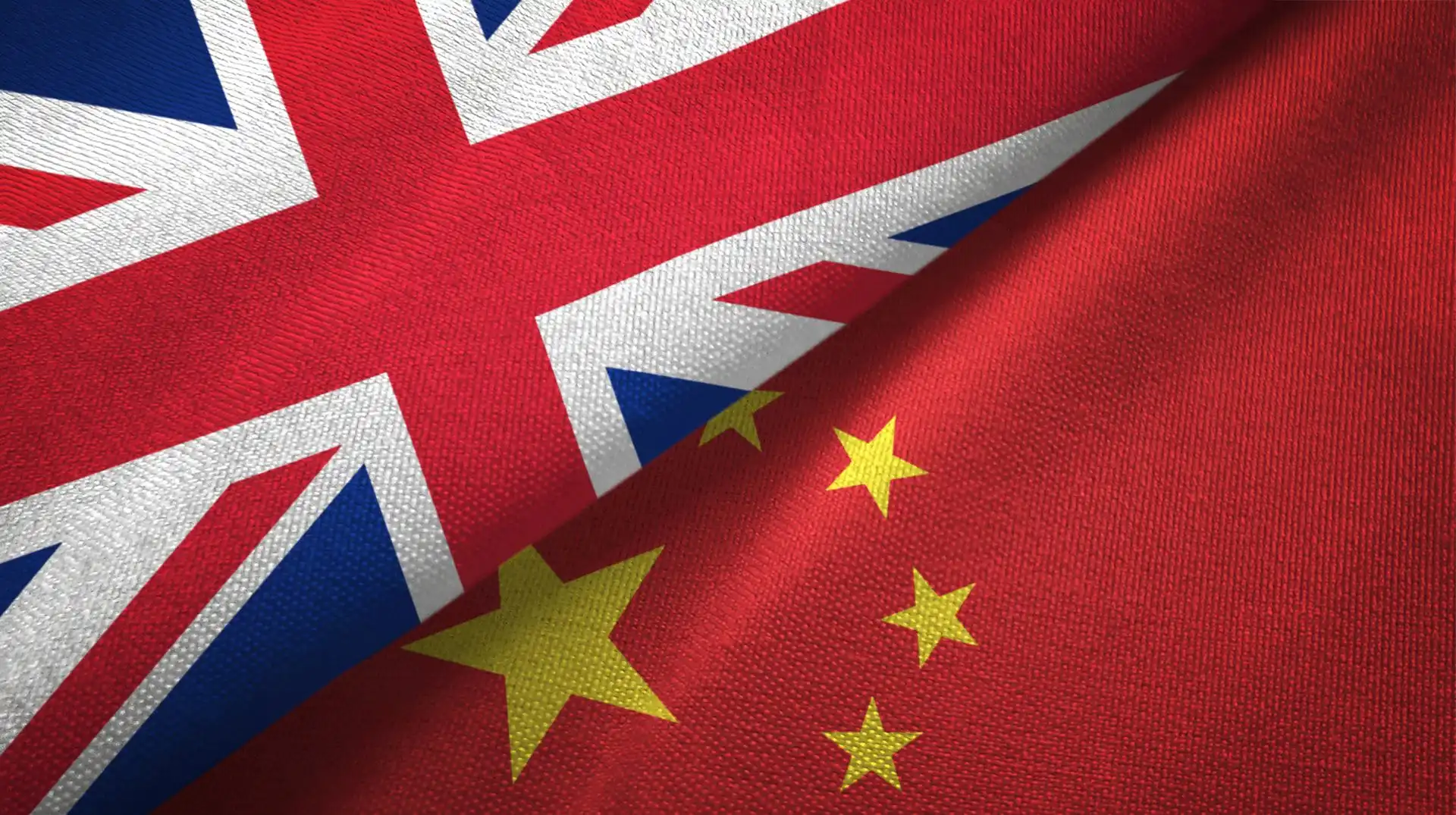
Regardless of whether one views the decision as wise or strategically naïve, one fact now cuts through the political noise: the UK has approved China’s new 20,000m² embassy in London.
Diplomacy works in sequences rather than isolated incidents, and this approval has accelerated the next step, the first official visit by a British Prime Minister to China since 2018, pencilled in for January 2026. The embassy decision, the visit, and the softening public narrative are not separate developments. They form a coherent sequence, signalling a recalibration in the UK’s approach to China at a moment when geopolitical leverage, rather than alignment, defines major power relations.
The Prime Minister’s recent Mansion House speech captured this emerging realism. China was described, accurately, as both a national security challenge and an economic reality. While successive Prime Ministers have grappled with this tension, Keir Starmer has been more explicit about the trade-offs. UK–China relations will be neither a return to a nostalgic “Golden Age” nor a descent into a permanent “Ice Age”, but something more complex, conditional and transactional.
Recent global developments, including tensions around Greenland and President Trump’s unapologetic transactionalism, underscore a harder truth: interests and relative power matter more than rhetoric. This reality must inform how Britain approaches all major relationships.
The ‘mega embassy’ approval’ is a prime example of this pragmatism. Critics point to national-security concerns and the symbolism of China’s largest European embassy sitting opposite the Tower of London. Those concerns are legitimate, but the land was purchased legitimately, years ago, and rejecting the application would have undermined the UK’s diplomatic credibility, jeopardising the Prime Minister’s forthcoming visit. Approval reflects a pragmatic calculation that this step was strategically necessary.
Crucially, approving the embassy is not an endorsement of Chinese policy. It is recognition that diplomacy requires structure and reciprocity. The decision creates political space for high-level engagement and gives the UK leverage to demand clarity and transparency. This reflects an emerging understanding that engagement without capability is dangerous, while disengagement without strategy is impossible.
This shift is increasingly visible inside government. The establishment of a new Economic Security Unit provides Whitehall with a mechanism to monitor and mitigate risks associated with strategic competitors, China included. While public rhetoric has softened, the machinery of risk management has become more deliberate and structured.
The real inflection point, however, will not be the building itself, but the Prime Minister’s visit to Beijing. What must follow is a coherent China strategy – one that blends economic engagement with economic security, clarifies priority sectors, defines red lines, and strengthens investment-screening tools.
I was in Beijing during Theresa May’s 2018 visit. Shaking hands with a British Prime Minister was, for me, a historic moment but it was the last relatively “quiet” visit before the world fully registered the scale of China’s transformation. Since then, China has moved far beyond being the “factory of the world” to become a technological superpower. The contrast between the calm of 2018 and the scale of change since then explains why today’s decisions carry far greater strategic weight.
The UK now faces a dilemma, though not a binary one. Should it pursue managed engagement with China, while protecting core interests, or align even more tightly. There is no frictionless path, but Britain retains a strategic freedom; it is not compelled to align exclusively with any single power.
This is why sequencing matters. Embassy approval, followed by a Prime Ministerial visit, signals an attempt to stabilise a relationship, and establish guardrails during a time of heightened global volatility. The alternative – freezing diplomacy while economic and geopolitical realities continue to shift – would leave the UK reacting rather than shaping outcomes.
So, what comes next? Three broad scenarios are now visible. The first is managed stabilisation, political ties are steadied and engagement is pursued selectively and pragmatically. The second is strategic retrenchment, with a sharpened US–China confrontation pulling the UK into a more rigid alignment, narrowing economic room for manoeuvre. Under this trajectory, an industrial strategy championing eight priority UK sectors will see little daylight in China. The third and most damaging is drift, where symbolism replaces strategy and Britain oscillates between caution and indecision.
It is also worth being clear-eyed about what Britain brings to the table. The UK remains a services superpower, maintaining a roughly £10 billion services surplus with China. Our universities and financial and professional services sectors remain globally competitive in areas that typically pose lower security risks. These sectors will likely form the core of the Prime Minister’s discussions in Beijing.
The embassy decision is only the beginning. Handled well, this could mark a step forward: not towards accommodation or confrontation, but towards a more mature, interest-driven foreign policy suited to a transactional and contested global order. Handled poorly, it risks becoming another missed opportunity. What follows will matter far more.
Steven Lynch MBE is Director of International Trade at the British Chambers of Commerce