

Making An Impact
Circulatory Pledge signatories are invited to share the action they have taken by submitting a case study.
Case Study
British Chambers of Commerce: Establishing A New Re-use Partnership For Old IT And Phones

After making our own Circulatory commitment the BCC forged a new partnership with charity Little Lives, and now all our old electronic equipment will be available for reuse by disadvantaged young people in London.
Commit
We are fortunate that His Majesty the King is a Patron on the British Chambers of Commerce and were honoured to be invited to contribute to the development of the ReCirculate project and to use our network to promote it.
Plan
While we are already relatively good at recycling, as an office-based business we hadn’t given much thought to the potential for reuse. We used a discussion at a senior leadership team meeting and considered what reusable equipment we regularly throw away, identifying old IT as a specific target for re-use.
Partner
Through internet research we identified a brilliant charity, Little Lives, which runs a Technology Programme collecting and refurbishing old electronic devices and reallocating them to disadvantaged children across the UK, supporting digital access and education.
Act
By giving thought to the potential of reuse, the BCC now has a simple but impactful default process for disposing of old IT equipment. We were able to clear a cupboard of old laptops and have already donated 5 machines.
Share
By giving thought to the potential of reuse, the BCC now has a simple but impactful default process for disposing of old IT equipment. We were able to clear a cupboard of old laptops and have already donated 5 machines.

Case Studies
Case Studies
Lorem ipsum dolor sit amet consectetur. Egestas eu ut odio quis egestas venenatis eu sem at. Nunc diam ultrices mi morbi scelerisque suscipit ullamcorper arcu. Volutpat facilisis velit tellus.
TTB CircularIT
Unlocking the Hidden Value in Your Unwanted or End-of-Life Technology
TTB CircularIT
Unlocking the Hidden Value in Your Unwanted or End-of-Life Technology

Retaining the value embedded in technology through secure, reuse-first circularity.
Every year, organisations retire thousands of laptops and IT devices long before they reach the end of their functional life. Too often, valuable products are recycled prematurely or left unused in storage, locking away embodied carbon, critical materials and economic value. At TTB Circular IT, we believe circularity starts by keeping products in use for as long as possible and recovering materials only when reuse is no longer viable.
Our secure, reuse-first IT asset disposition (ITAD) model helps organisations maximise the value retained within unwanted technology through certified data erasure, refurbishment, reuse and transparent impact measurement. Suitable refurbished devices continue creating value through Tech-Takeback Foundation, our independent charity partner supporting people experiencing digital exclusion.
Our 2025 Impact Report demonstrates the results of this circular approach. During the year, 12,800 technology items were collected, 4,800 were successfully reused and 244 people received digital inclusion support. Together, these activities avoided 314 tonnes of Scope 3 CO₂e and generated an estimated £12.58 million in social value.
For us, circularity means retaining products, preserving materials and creating lasting environmental, economic and social value through every device we process.
Commit
Retaining the value embedded in technology through secure, reuse-first circularity.
Every year, organisations retire thousands of laptops and IT devices long before they reach the end of their functional life. Too often, valuable products are recycled prematurely or left unused in storage, locking away embodied carbon, critical materials and economic value. At TTB Circular IT, we believe circularity starts by keeping products in use for as long as possible and recovering materials only when reuse is no longer viable.
Our secure, reuse-first IT asset disposition (ITAD) model helps organisations maximise the value retained within unwanted technology through certified data erasure, refurbishment, reuse and transparent impact measurement. Suitable refurbished devices continue creating value through Tech-Takeback Foundation, our independent charity partner supporting people experiencing digital exclusion.
Our 2025 Impact Report demonstrates the results of this circular approach. During the year, 12,800 technology items were collected, 4,800 were successfully reused and 244 people received digital inclusion support. Together, these activities avoided 314 tonnes of Scope 3 CO₂e and generated an estimated £12.58 million in social value.
For us, circularity means retaining products, preserving materials and creating lasting environmental, economic and social value through every device we process.
Plan
Our circular model is designed to maximise product life, retain material value and ensure complete confidence in secure technology reuse.
Circularity begins before a device leaves an organisation. We work with customers to understand the equipment being retired, data-security requirements, governance obligations and reporting needs, ensuring every project is planned around secure handling, full traceability and maximum opportunity for reuse.
Devices are collected through a controlled chain of custody and individually recorded to maintain complete accountability throughout the process. All data-bearing equipment undergoes certified data erasure, providing customers with the assurance and evidence needed to meet security, compliance and audit requirements. By removing concerns around data protection, we eliminate one of the greatest barriers to product reuse.
Following secure sanitisation, every device is assessed against a clear value hierarchy. Wherever possible, products are refurbished and returned to productive use, extending their lifespan and avoiding the environmental impacts associated with manufacturing replacement equipment. A proportion of suitable refurbished laptops is supplied to Tech-Takeback Foundation, where they help people experiencing digital exclusion access education, employment, healthcare and other essential online services.
Only when a device has reached the end of its practical life do we move to responsible material recovery. Equipment is dismantled through approved recycling processes, ensuring valuable metals, plastics and components are recovered for continued use within the circular economy.
Measurement is embedded throughout our model. We record the actual weight of equipment reused and recycled before calculating avoided environmental impacts using manufacturer lifecycle data and recognised sector studies. This enables us to report estimated reductions in Scope 3 carbon emissions, water consumption, chemical use, fossil resources and demand for virgin materials. Social value is independently assessed using HACT Social Value Insights, supported by recipient surveys and partner feedback.
By designing every stage around the principles of retain products, recover materials and create value, our circular model delivers measurable environmental, commercial and social outcomes while giving organisations complete confidence that unwanted technology is managed securely and responsibly.
Partner
Driving material change requires collaboration. No single organisation can deliver a truly circular IT model alone.
Retaining products at their highest value depends on a connected value chain in which organisations, specialist processors and community partners each play a distinct role. At TTB Circular IT, we have developed a collaborative model that enables technology to remain in productive use for longer while delivering measurable environmental and social outcomes.
Our customers provide the starting point by choosing a reuse-first approach when retiring IT assets. Rather than treating redundant technology as waste, they release equipment with significant remaining value into a secure circular process. TTB Circular IT provides the critical operational link, delivering controlled collections, certified data erasure, refurbishment, redistribution and transparent impact reporting that gives organisations the confidence to prioritise reuse over premature recycling.
Our partnership with Tech-Takeback Foundation extends the life of suitable refurbished devices by ensuring they reach people who can benefit most. Working with local charities, community organisations and referral partners, the Foundation identifies people experiencing digital exclusion and provides more than a laptop alone. Recipients receive tailored support, digital skills training and, where required, connectivity solutions, enabling them to participate fully in modern digital life.
The impact of this partnership is measurable. During 2025, 244 people received digital inclusion support. Of those supported, 232 accessed education or training, 83 secured employment, including 23 entering full-time work, 197 reported improved confidence and wellbeing, and 190 said they could access essential services more easily.
These outcomes demonstrate that circularity is about more than retaining products and recovering materials. By extending the useful life of technology, we also extend its ability to create opportunity. Together, our customers, TTB Circular IT and the Tech-Takeback Foundation show how collaboration can transform redundant IT into lasting environmental, economic and social value.
Act
Our circular model demonstrates that keeping products in use for longer delivers measurable environmental, material and social value.
In 2025, operating as the original Tech-Takeback organisation, we collected 12,800 technology items weighing 17 tonnes, each processed through our secure, reuse-first circular model. Every device was assessed individually to identify its highest-value outcome, ensuring products remained in use wherever possible before material recovery was considered.
As a result, 4,800 items (6 tonnes) were successfully refurbished and returned to productive use, extending product life and avoiding the environmental impacts associated with manufacturing replacement devices. A further 4,700 data-bearing devices underwent certified data erasure, removing one of the greatest barriers to secure technology reuse. Equipment that had genuinely reached the end of its useful life was responsibly recycled, recovering valuable materials including aluminium, copper, steel, plastics, batteries, circuit boards, display glass, magnesium and rare earth elements for continued use within the circular economy.
Our reuse approach delivered significant environmental benefits, avoiding an estimated 314 tonnes of Scope 3 CO₂e, alongside substantial reductions in water consumption, chemical use, fossil resources and demand for virgin materials. By prioritising product reuse over premature recycling, we retained more of the value already embedded within existing technology while reducing reliance on new manufacturing.
Our circular model also generated measurable social value. Through our partnership with Tech-Takeback Foundation, 244 people experiencing digital exclusion received refurbished devices and tailored support, enabling access to education, employment, healthcare and essential online services. This work generated an estimated £9.62 million in social value, with secure household collections and reuse services contributing a further £2.96 million, bringing the total estimated social value created during 2025 to £12.58 million.
These outcomes demonstrate that circularity is not simply about diverting waste. By retaining products at their highest value, recovering materials responsibly and measuring the impact created, TTB Circular IT has shown that secure IT asset disposition can deliver lasting environmental, economic and social change.
Share
We believe circularity accelerates when organisations openly share evidence, methodology and learning.
Our 2025 Impact Report was produced to demonstrate what a secure, reuse-first circular IT model can achieve and to provide a transparent evidence base for the environmental and social value created through extending product life. Rather than treating circularity as a series of isolated activities, the report brings together product reuse, material recovery, environmental performance and digital inclusion to show the full value retained through our approach.
Transparency is fundamental to building confidence in circular IT. We openly report the number of devices collected, securely sanitised, refurbished, reused and responsibly recycled, together with the resulting reductions in Scope 3 carbon emissions, water consumption, chemical use, fossil resources and demand for virgin materials. By publishing both our outcomes and the methodology used to calculate them, customers and stakeholders can understand not only the scale of the impact achieved, but how it has been measured.
Our reporting combines recognised environmental assessment methods with social impact measurement. Environmental savings are calculated using the actual weight of equipment processed, supported by manufacturer lifecycle data and established sector studies. Social value is estimated using HACT Social Value Insights and informed by recipient surveys and feedback from Tech-Takeback Foundation and community partners, providing a robust and transparent picture of the wider benefits created.
Alongside the data, we share the stories that bring circularity to life. Individuals like Chloe, a 19-year-old care leaver who remained in education, secured part-time employment and rebuilt her confidence after receiving a refurbished laptop, demonstrate that extending the life of technology also extends the opportunities it creates.
As TTB Circular IT and Tech-Takeback Foundation now operate independently, each organisation reports transparently on its specialist area while continuing to demonstrate the shared value of our circular model.
Our ambition extends beyond measuring our own impact. By sharing our evidence, methodology and learning openly, we aim to encourage more organisations to adopt reuse-first IT asset disposition, retain products in use for longer and recognise that circularity delivers far more than waste reduction: it creates lasting environmental, economic and social value.
John F Hunt
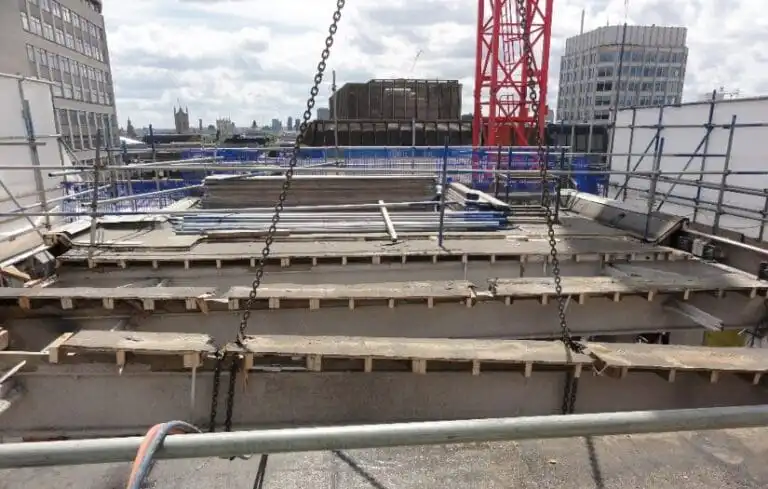
John F Hunt Recovers Significant Steel & Materials for Reuse at its Central London Demolition Project
John F Hunt
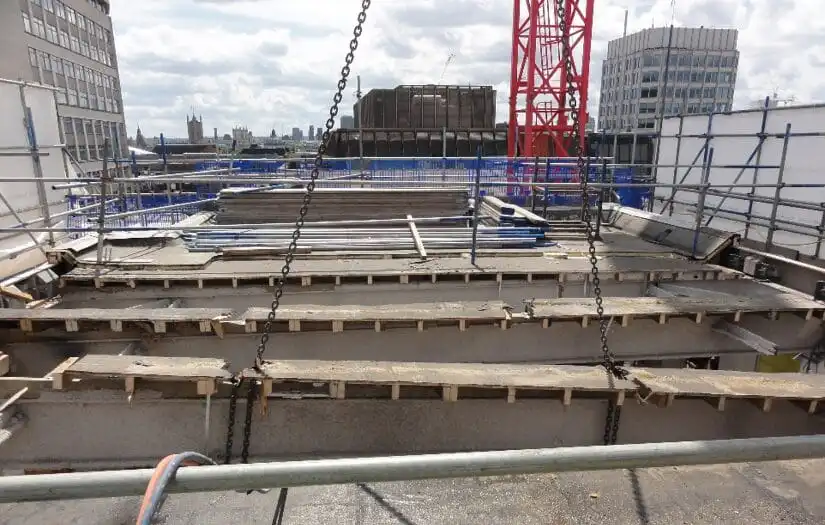
John F Hunt Recovers Significant Steel & Materials for Reuse at its Central London Demolition Project

A thorough pre-demolition audit identified significant quantities of materials suitable for reuse within the 30 Duke Street demolition project in St James’s, London. Continuing our long-standing commitment to material reuse, John F Hunt salvaged 8 tonnes of structural steel and approximately 1,800 interior items during the demolition of two adjoining buildings.
The original 1960s building, a concrete 6-storey structure, contained 16 tonnes of steel beams, of which 8 tonnes were reused in the project’s temporary works. The remainder of the salvaged steel was transported to the steel stockholder, EMR, for reprocessing in further projects. The steel reuse saved approximately 12tCO2e when compared to using newly manufactured alternatives.
Wood, bricks, furniture, radiators, windows, glass partitions, decorations, storage tubs, electronics, textiles, aluminium, ceramics, paints, adhesives, and a boiler were donated to organisations such as Hackney City Farm, M01Youths, D.R.C.A. Community Association and other local organisations, artists, and community groups. The estimated financial savings from reusing these items in new projects were around £26,000.
Commit
John F Hunt signed the pledge, reinforcing our well-established commitment to the circular economy and environmental sustainability through our demolition and construction operations. These practices have been embedded across all our projects over several years, reducing the need for additional processing and helping preserve embodied value.
Plan
By developing more efficient technologies and monitoring recycling and waste minimisation, we maximise the reuse of as many materials as possible, followed by secondary material use, lessening the demand for primary resources. Innovation is essential for both growing our businesses and protecting our surroundings by creating sustainable solutions.
We consistently achieve a 99% diversion rate of non-hazardous waste from landfill, while actively developing new reuse pathways to keep resources in circulation for as long as possible. This will not stop.
The John F Hunt Group consists of 21 businesses, and in addition to the construction-related activities, our IT company also operate secondary-use channels.
TechVertu erases data and secures damaged laptops and phones, delivering them to the ‘Every Child Online’ charity. Here, they refurbish and donate items to those who need them most, giving children and young people the opportunity to learn and connect. Those items that are beyond repair are disassembled, and the components made into jewellery or pieces of art.
Partner
We are committed to working collaboratively with our clients, stakeholders, and supply chain to ensure both first and secondary material use.
We will continue to build our outlet framework of reuse organisations, such as Saint Gobain (glass), EMR (steel), Envirocycle (carpet tiles) and Material Index (Internal Fixtures).
This will help feed through to schools, charities, artists, and community groups, such as Hackney City Farm and Studio Tip.
Act
We undertake extensive, in-depth pre-demolition and site audits on all our construction projects nationwide, collaborating closely with clients and stakeholders at the embryonic stages to identify every opportunity for reuse and recycling.
We shall monitor our Group-wide performance, improve, and share in the hope that we can influence others to drive long-term behaviour change within the industry.
Share
John F Hunt actively promotes and communicates circular initiatives across all our platforms to showcase their positive impact and drive industry-wide change.
Our Sustainability team will continue to speak at events such as Footprint+ and Futurebuild to show what is possible.
We will share all our practices with all those who will listen and implement.
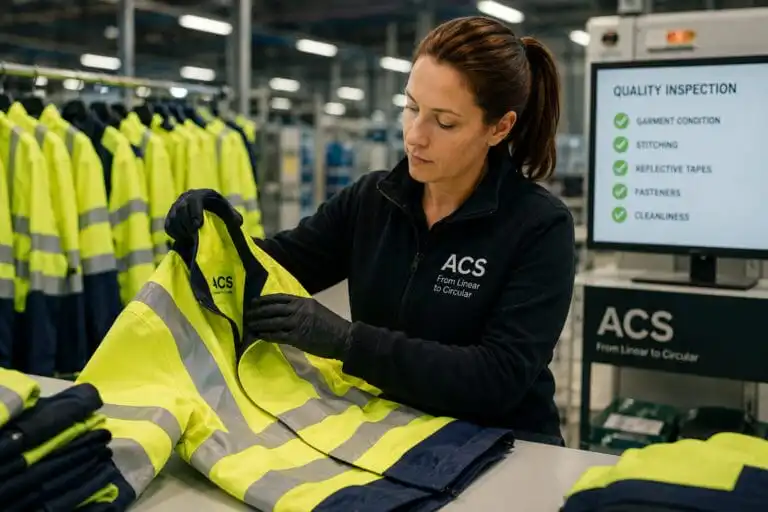
ACS Clothing Ltd
Unlocking the Hidden Value in Your Workwear
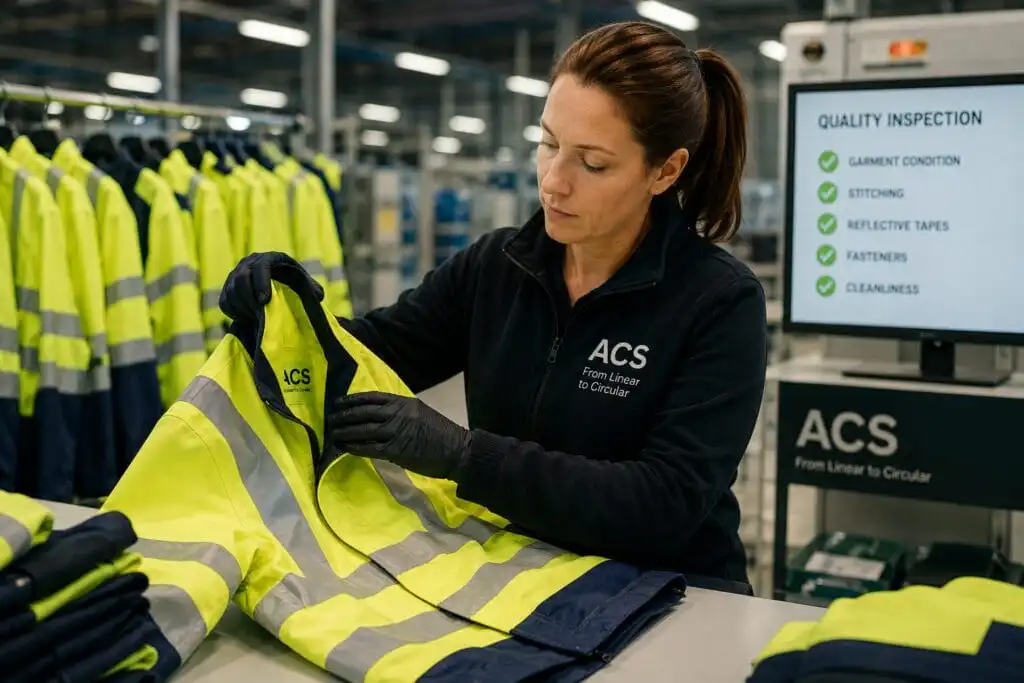
ACS Clothing Ltd
Unlocking the Hidden Value in Your Workwear
Building the UK’s Circular Workwear Infrastructure
“Creating the partnerships, infrastructure and innovation that enable organisations to reduce costs, cut carbon and transform workwear into a valuable circular asset.”
“The future of workwear is circular—and the infrastructure to make it possible is being built today.”
Every year, millions of workwear, uniform and PPE garments are removed from service despite retaining significant functional life, creating unnecessary costs, avoidable carbon emissions and the loss of valuable resources.
ACS Clothing is changing that.
Drawing on almost 30 years of expertise in garment inspection, repair, refurbishment, sanitisation and reverse logistics, we are developing one of the UK’s first end-to-end Circular Workwear Infrastructures. Through collaboration with employers, manufacturers, suppliers, academia, technology partners and the public sector, we are creating the systems, evidence and operational capability needed to keep garments in circulation for longer.
This is more than a service—it is shared infrastructure that enables organisations to embrace circularity without building their own capability from scratch. By extending garment life through reuse, repair, redistribution and responsible recycling, organisations can reduce procurement costs, lower Scope 3 emissions, strengthen ESG performance and build more resilient supply chains.
Our ambition reaches beyond workwear. We believe this collaborative model can provide a blueprint for the wider fashion and textile industry, helping prepare the UK for future circular economy policies while demonstrating that sustainability and commercial success can go hand in hand.
We are building more than infrastructure—we are building a movement. One that invites organisations of every size to help shape the future of circular workwear and demonstrate what can be achieved when industry, government and academia work together for the greater good.
Commit
ACS believes the future of workwear isn’t about buying more sustainable garments—it’s about creating the infrastructure that keeps every garment in use for as long as possible.
Every year, millions of workwear garments, uniforms and items of PPE are removed from service despite retaining significant functional life. They are replaced because employees leave, branding changes, garments are over-issued or procurement processes favour replacement over recovery. The result is unnecessary cost, avoidable carbon emissions and millions of garments becoming waste long before they should.
We recognised that the challenge wasn’t a lack of sustainable products. The real barrier was the absence of the infrastructure needed to make circularity practical.
Our commitment was therefore far more ambitious than launching another recycling initiative.
We committed to building one of the UK’s first Circular Workwear Infrastructures—creating the systems, expertise, technology and partnerships that enable organisations to recover, inspect, sanitise, repair, debrand, redistribute and recycle garments at scale. Through our Circular Workwear as a Service model, employers, manufacturers and workwear providers can access this infrastructure without investing in their own facilities or capabilities, making circularity simpler, lower risk and commercially attractive.
This commitment directly reflects the Circularity in Practice Pledge. We have developed practical action plans with customers, partnered with manufacturers, universities, charities and public sector organisations, and are demonstrating through live pilots that circular workwear delivers measurable commercial, environmental and social benefits. Every partnership strengthens the infrastructure, improves the model and builds confidence that circularity can become business as usual.
We also believe this work could become an important precursor to the UK’s future implementation of Extended Producer Responsibility (EPR) for textiles. Legislation alone will not deliver circularity. Success depends on having the infrastructure capable of recovering, inspecting, redistributing and recycling products safely and efficiently. By proving these systems work today, we can help remove barriers to wider adoption tomorrow.
Most importantly, we believe no organisation can transform an industry alone. Lasting change will only happen through partnership. By bringing together employers, manufacturers, suppliers, academia, charities and government, we can create the infrastructure that enables circular workwear to become the norm. If successful, the model has the potential to transform not only the workwear sector but also provide a blueprint for accelerating circularity across the wider UK fashion and textile industry.
Plan
From the beginning, we recognised that no single organisation had all the answers. Building a Circular Workwear Infrastructure would require a shared vision, an open mind and a willingness to learn, adapt and innovate together.
Rather than designing a solution for one customer or one sector, we developed a flexible methodology capable of evolving through collaboration. We listened to employers, manufacturers, suppliers, universities, technology partners, charities and public sector organisations to understand the practical barriers preventing circular workwear from becoming mainstream. Their insights have shaped every stage of our action plan and continue to influence how the model develops.
Our approach has been deliberately iterative. Every conversation, pilot and partnership provides new evidence that helps refine the infrastructure, improve operational processes and identify new opportunities. We believe the strongest circular solutions are not created in isolation—they are co-designed with the organisations that will ultimately use them.
By mapping the complete garment lifecycle, we identified where value was being lost and developed an end-to-end circular operating model covering collection, reverse logistics, inspection, sanitisation, repair, debranding, redistribution, resale, fibre recycling and transparent environmental reporting. Alongside this, we established a comprehensive measurement framework to quantify garment recovery rates, procurement cost avoidance, Scope 3 carbon reductions, waste diversion, resource efficiency, social value and wider business benefits.
Our plan is designed for the future as well as the present. It incorporates Digital Product Passports, RFID traceability, AI-enabled garment inspection and emerging circular economy legislation, ensuring the infrastructure continues to evolve alongside technology, policy and market expectations.
Most importantly, we have remained true to one guiding principle: this is bigger than ACS. Our ambition is not simply to build a successful service, but to help create the infrastructure that enables an entire industry to become circular. That means listening more than talking, partnering rather than competing, sharing rather than protecting knowledge, and continuously adapting as we learn.
Because ultimately, this isn’t just about workwear. It’s about creating a more resilient economy, supporting UK industry, protecting our planet and leaving a better legacy for future generations.
Partner
The opportunity isn’t simply to recover garments. It’s to build the infrastructure that enables an entire industry to become circular.
At ACS, we believe no single organisation can achieve that alone.
The circular economy will not be built by individual organisations acting in isolation. It will be built through partnerships that create the shared infrastructure every organisation can access and benefit from.
That belief underpins everything we are doing.
We are bringing together employers, workwear manufacturers, suppliers, technology innovators, universities, policymakers and industry bodies to co-design and validate a new Circular Workwear Infrastructure for the UK. Together, we are proving that extending garment life is not only environmentally responsible but commercially viable, operationally practical and capable of delivering measurable social value.
Our pilot programmes span utilities, construction, housing, healthcare and facilities management, providing real-world evidence across diverse industries. Academic partners are independently measuring environmental, financial and operational outcomes, while technology partners are advancing digital product passports, AI-enabled garment identification, RFID traceability and data-driven reporting. Every collaboration strengthens the evidence, capability and confidence needed to accelerate industry-wide adoption.
Our ambition extends beyond supporting individual organisations. We want to enable manufacturers and workwear providers to offer fully circular solutions to their customers, with ACS providing the operational infrastructure behind the scenes. By sharing expertise, infrastructure and innovation, we can make circularity accessible to organisations of every size without each needing to build its own capability.
We also believe this collaborative model can help prepare the UK for future Extended Producer Responsibility (EPR) for textiles. By demonstrating that the infrastructure, partnerships and operating models already exist, we can help reduce barriers to implementation and provide a practical blueprint for how EPR could work successfully across the wider fashion and textile industry.
This is an invitation to collaborate. If you share our ambition to reduce waste, lower carbon emissions, improve resource efficiency and unlock new commercial opportunities through circularity, we would welcome the opportunity to work together.
By combining the strengths of business, government and academia, we can build the infrastructure that transforms workwear today—and helps create a truly circular textile economy for generations to come.
Act
We implemented our Circular Workwear as a Service model by embedding circularity into everyday workwear management, making reuse the default option rather than disposal. Rather than creating another recycling initiative, we developed the operational infrastructure needed to keep workwear, uniforms and PPE in circulation for as long as possible, transforming circular principles into practical day-to-day operations.
Our model integrates collection, reverse logistics, inspection, grading, professional sanitisation, repair, refurbishment, debranding, redistribution and responsible recycling into a single managed service. Every returned garment is professionally assessed to determine its highest-value recovery route, ensuring reuse is always prioritised before recycling. This enables organisations to recover garments that still retain significant functional value, extending their useful life while reducing unnecessary replacement purchases.
The model has already been implemented through pilot projects across multiple sectors, demonstrating that garments traditionally considered waste can instead be recovered, reused and kept in circulation for longer. Early results have shown the potential to reduce textile waste, lower procurement costs, avoid unnecessary carbon emissions and improve resource efficiency, providing organisations with practical evidence that circular workwear can deliver measurable environmental and commercial benefits.
Most importantly, the programme is changing everyday behaviours. Organisations are beginning to embed garment recovery into procurement, asset management and operational processes, while employees are encouraged to return workwear at the end of use rather than dispose of it. This simple but fundamental shift changes the perception of workwear from a disposable consumable to a managed business asset whose value can be retained through multiple life cycles.
To support long-term adoption, we have integrated environmental reporting, carbon measurement and financial performance into the service. This enables organisations to quantify garment recovery rates, procurement cost avoidance, waste reduction and Scope 3 emissions, allowing future purchasing decisions to be based on robust evidence rather than assumptions. Because the model integrates with existing operational processes, organisations can adopt circular workwear without fundamentally changing how they manage their workforce or supply chains.
Our ambition extends beyond individual pilots. We are creating the shared infrastructure that enables employers, manufacturers and workwear suppliers to adopt circular business models without each organisation having to develop its own recovery capability. By making reuse practical, measurable and commercially viable, we believe Circular Workwear as a Service can establish a new industry standard—demonstrating that keeping products in use for longer is not only environmentally responsible, but also commercially beneficial and essential to building a more resilient UK textile industry.
Share
From the outset, we recognised that no single organisation can transform the workwear industry alone. The circular economy will not be built by individual organisations acting in isolation. It will be built through partnerships that create the infrastructure every organisation can use.
That belief has shaped every stage of our journey.
As a small team with big ambitions and an even bigger purpose, we have focused as much on collaboration as innovation. We have shared our learning through industry conferences, circular economy forums, university partnerships, webinars, business networks and direct engagement with organisations across the UK and Europe. We have spoken openly about both our successes and our challenges because we believe collaboration accelerates innovation.
Our approach has always been to demonstrate rather than simply describe. We have offered free pilot projects and trials with organisations across utilities, construction, housing, healthcare and facilities management, generating practical evidence that circular workwear is commercially viable, operationally achievable and environmentally beneficial. Every pilot strengthens the business case for wider adoption.
Alongside industry, we continue to seek new collaborations with universities, technology innovators, manufacturers and workwear suppliers to develop the next generation of circular solutions. We are actively engaging with organisations such as WRAP, Zero Waste Scotland, the United Nations, the British Chambers of Commerce and international partners across Europe to share knowledge, explore new models and accelerate the transition towards a circular textile economy.
Increasingly, our focus is moving beyond individual pilots towards developing new circular models for specific product categories and industry sectors, creating scalable solutions that can be replicated nationally and internationally.
We believe this collaborative infrastructure can also help prepare the UK for future Extended Producer Responsibility (EPR), providing policymakers and industry with practical evidence that circular systems can work at scale.
Our ambition is simple but bold: to make Circular Workwear as a Service the new industry standard and create a blueprint capable of transforming the wider fashion and textile industry.
The opportunity isn’t simply to recover garments. It’s to build the infrastructure that enables an entire industry to become circular.
If you share that ambition—whether you are an employer, manufacturer, brand, supplier, technology partner, academic institution, policymaker or investor—we invite you to join us. Together, we can build the partnerships, evidence and infrastructure needed to transform today’s workwear into tomorrow’s circular economy.

MTArt Agency
Stefania Tejada X Royal London Asset Management: Making Public Art Sustainable

MTArt Agency
Stefania Tejada X Royal London Asset Management: Making Public Art Sustainable

Royal London Asset Management commissioned MTArt Artist Stefania Tejada a bespoke hoarding artwork for the Mayfair Quarter, creating a piece to adorn the building site at 111–117 New Bond Street, reflecting their new branding.
Measuring 16 metres in height and 60 metres in length, the large-scale canvas, titled ‘Expressions of the Universe: A Dialogue on Heritage and Spirituality’, pays tribute to the diverse cultural forces that have shaped London’s identity through faith, artistry, and shared global heritage.
The artwork is treated with a Clean Air photocatalytic coating, which helps reduce air pollution by breaking down harmful NOx particles, contributing to a cleaner and healthier urban environment.
Commit
MTArt Agency has signed the pledge to display that beyond showcasing and raising awareness of sustainability, public art and artistic practice is capable of being sustainable in and of itself.
Plan
MTArt Agency works with artists to ensure the topic of depicting and enacting change and sustainability, in order to leverage resources and populations, remains central to our practice. In this case study, Clean Air was brought in during initial planning stages to ensure that the entire production process and final output was sustainable.
Partner
Here at MTArt Agency, we worked with our external partners at Royal London Asset Management (RLAM) to ensure not only a visually strong creative outcome and storytelling that are consistent with their new branding, but also to reflect this visual commitment to sustainability in the nature of the material.
In the creation of this artwork, we worked with Clean Air to coat the work in a photocatalytic coating, reducing air pollution by breaking down harmful NOx particles, which is especially pertinent in the busy New Bond Street area. Consequently, this project educates our partners at RLAM, and broader audiences, how to make commissioning as sustainable as possible, whilst also having a strong visual impact.
Act
As a registered B Corp, we at MTArt implemented our plan of showcasing environmentally beneficial approaches to art-making by centralising B Lab standards through our development process, in particular the Climate Action standards.
By working with Clean Air, as a UK based Heating, Ventilation and Air Conditioning (HVAC) company, we were also able to enact responsible approaches to carbon footprint regulation, while supporting domestic organisations.
Share
MTArt Agency shares news of completed projects across social media channels to raise awareness of our practice and showcasesustainability.
After the completion of the project, MTArt Agency has worked with UCL to survey localised respondents who live and work in the surrounding area for the public art piece, the results of which will be published with UCL.